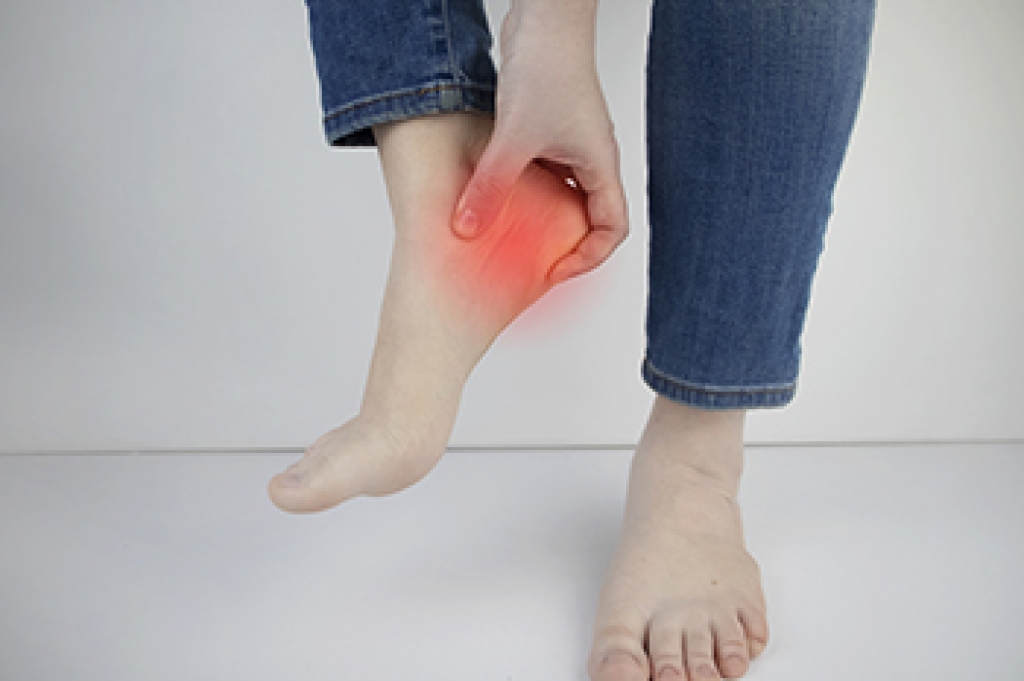
Understanding the Agony and Easing the Pain of Plantar Fasciitis

Plantar fasciitis is a prevalent foot condition characterized by inflammation of the plantar fascia, a thick band of tissue that runs along the bottom of your foot, connecting your heel to your toes. This vital ligament supports the arch of your foot and plays a significant role in daily activities. When it becomes inflamed, it can cause excruciating pain, typically described as a stabbing sensation in the heel or along the arch. The good news is that plantar fasciitis is treatable. Resting the affected foot  and performing stretching exercises may help to alleviate the pain and reduce inflammation. Wearing supportive footwear and arch supports are essential for providing comfort and reducing strain. While surgery is rarely necessary, it may be considered when all other treatments fail. By seeking proper treatment for plantar fasciitis, patients can take steps toward finding relief and restoring pain-free mobility to their daily life. If you have developed plantar fasciitis, it is strongly suggested that you schedule an appointment with a podiatrist who can effectively diagnose and treat this condition.

Plantar fasciitis can be very painful and inconvenient. If you are experiencing heel pain or symptoms of plantar fasciitis, contact one of our podiatrists  from East Ocean Podiatry . Our doctors can provide the care you need to keep you pain-free and on your feet.

What Is Plantar Fasciitis?

Plantar fasciitis is the inflammation of the thick band of tissue that runs along the bottom of your foot, known as the plantar fascia, and causes mild to severe heel pain.

What Causes Plantar Fasciitis?

  • Excessive running
  • Non-supportive shoes
  • Overpronation
  • Repeated stretching and tearing of the plantar fascia

How Can It Be Treated?

  • Conservative measures – anti-inflammatories, ice packs, stretching exercises, physical therapy, orthotic devices
  • Shockwave therapy – sound waves are sent to the affected area to facilitate healing and are usually used for chronic cases of plantar fasciitis
  • Surgery – usually only used as a last resort when all else fails. The plantar fascia can be surgically detached from the heel

While very treatable, plantar fasciitis is definitely not something that should be ignored. Especially in severe cases, speaking to your doctor right away is highly recommended to avoid complications and severe heel pain. Your podiatrist can work with you to provide the appropriate treatment options tailored to your condition.

If you have any questions, please feel free to contact our office located in Deerfield Beach, FL . We offer the newest diagnostic and treatment technologies for all your foot care needs.

Read more about Plantar Fasciitis

Dealing With Toenail Fungus

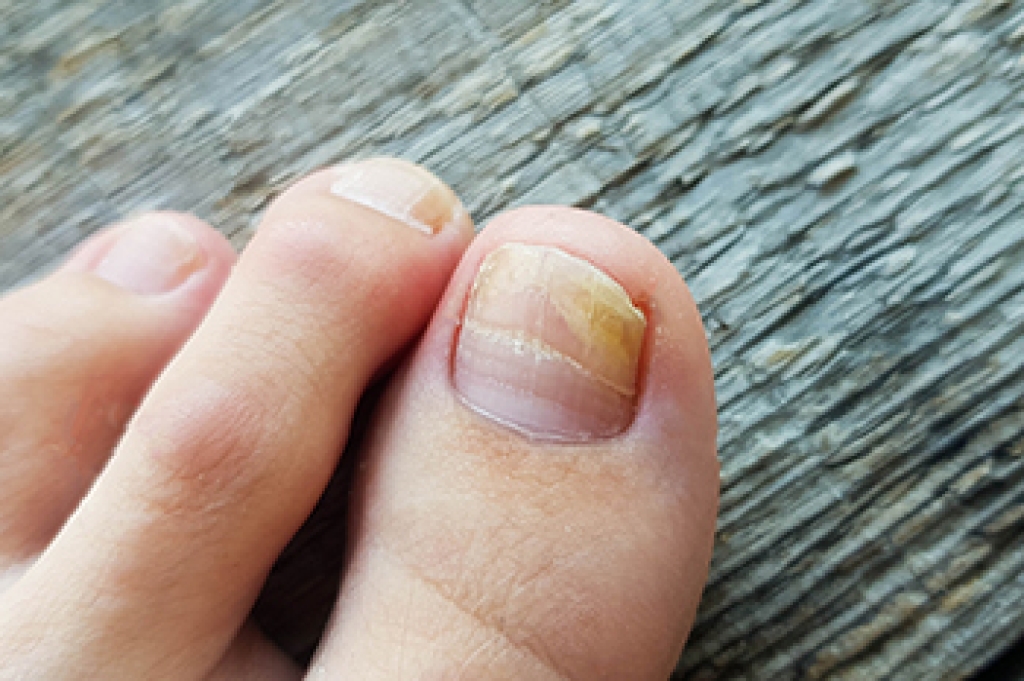
Toenail fungus, or onychomycosis, is a condition caused by dermatophytes, a group of fungi that thrive in warm, damp environments like your feet. It often begins as a white or yellow spot under the tip of the toenail and can progress to thickening, discoloration, and even nail detachment if left untreated. Ways to treat and subsequently prevent toenail fungus include washing your feet daily with soap and water, paying special attention to the toenails, and then drying your feet thoroughly, including the spaces between your toes to prevent moisture buildup. Wear shoes made of breathable materials, like leather or mesh, to reduce moisture accumulation and avoid wearing tight-fitting shoes for extended periods. In addition, change your socks daily, and opt for moisture-wicking socks if you sweat excessively. Use antifungal foot powder or spray to keep your feet dry and prevent fungal growth. Wear flip-flops or shower shoes in communal showers, locker rooms, and pool areas to minimize the risk of exposure to the fungus. If your toenail fungus persists or worsens despite these measures, it is suggested that you make an appointment with a podiatrist who can recommend prescription medications, laser therapy, or in severe cases, surgical nail removal.

For more information about treatment, contact one of our podiatrists of East Ocean Podiatry . Our doctors can provide the care you need to keep you pain-free and on your feet.

Toenail Fungus Treatment

Toenail fungus is a condition that affects many people and can be especially hard to get rid of. Fortunately, there are several methods to go about treating and avoiding it.

Antifungals & Deterrence

Oral antifungal medicine has been shown to be effective in many cases. It is important to consult with a podiatrist to determine the proper regiment for you, or potentially explore other options.

Applying foot powder on the feet and shoes helps keep the feet free of moisture and sweat.

Sandals or open toed shoes – Wearing these will allow air movement and help keep feet dry. They also expose your feet to light, which fungus cannot tolerate. Socks with moisture wicking material also help as well.

If you have any questions please contact our office located in Deerfield Beach, FL . We offer the newest diagnostic and treatment technologies for all your foot and ankle needs.

Read more about How to Treat Your Toenail Fungus

Benefits of In-Office Foot Surgery

In the field of podiatry, a significant shift has occurred over the past four decades. Initially, due to the challenges of obtaining hospital privileges, most podiatry surgeries were performed in-office. In-office surgery may seem unconventional to younger podiatrists, but it is an opportunity with benefits for both patients and doctors. With advancements in technology and cost-effective tools, in-office surgery offers practical solutions for common podiatric conditions. In addition to reducing costs, in-office surgery saves time, enhances patient convenience, and aligns with the changing landscape of healthcare. It is cost-effective and good for minimally invasive procedures. With local anesthesia and modern techniques, complications are minimal, and recovery is faster. While hospital-based surgery remains essential for certain cases, in-office surgery presents a valuable option for many podiatric procedures. Patients can have more immediate healing and cost savings, and podiatrists have an opportunity to diversify their practice and improve patient outcomes. If you need foot surgery, it is suggested that you make an appointment with a podiatrist to discuss whether they provide in-office procedures.

Foot surgery is sometimes necessary to treat a foot ailment. To learn more, contact one of our podiatrists of East Ocean Podiatry . Our doctors will assist you with all of your foot and ankle needs.

When Is Surgery Necessary?

Foot and ankle surgery is generally reserved for cases in which less invasive, conservative procedures have failed to alleviate the problem. Some of the cases in which surgery may be necessary include:

  • Removing foot deformities like bunions and bone spurs
  • Severe arthritis that has caused bone issues
  • Cosmetic reconstruction

What Types of Surgery Are There?

The type of surgery you receive will depend on the nature of the problem you have. Some of the possible surgeries include:

  • Bunionectomy for painful bunions
  • Surgical fusion for realignment of bones
  • Neuropathy decompression surgery to treat nerve damage

Benefits of Surgery

Although surgery is usually a last resort, it can provide more complete pain relief compared to non-surgical methods and may allow you to finally resume full activity.

Surgical techniques have also become increasingly sophisticated. Techniques like endoscopic surgery allow for smaller incisions and faster recovery times.

If you have any questions, please feel free to contact our office located in Deerfield Beach, FL . We offer the newest diagnostic and treatment technologies for all your foot care needs.

Read more about Foot and Ankle Surgery

Reminder: When Was the Last Time...?

Custom orthotics, or shoe inserts, should be periodically replaced. Orthotics must fit properly to give you the best results. Protect your feet and ankles!

Surgery Options for Flat Feet

Flat feet, resulting from a collapsed arch, can lead to pain and discomfort, affecting both children and adults. When non-surgical approaches fall short, surgical intervention offers a viable solution. Surgery for flat feet aims to reconstruct the foot's architecture to restore a supportive arch and alleviate complications like change of gait, knee pain, plantar fasciitis, and Achilles tendonitis. An evaluation before surgery involves a thorough history, examination, and imaging. Surgical intervention may involve tendon reconstruction, bone augmentation, joint fusion, or bone resection. Post-surgery recovery may take up to four months and requires keeping the weight off the affected foot as well as taking prescribed pain relief medication. A protective cast or boot may be needed. Surgical treatment for flat feet, while not necessary in many cases, offers an opportunity to regain mobility, alleviate pain, and enhance overall quality of life.  To find out if surgery for flat feet is right for you, it is suggested that you make an appointment with a podiatrist for a full examination. 

Flatfoot is a condition many people suffer from. If you have flat feet, contact one of our podiatrists from East Ocean Podiatry . Our doctors will treat your foot and ankle needs.

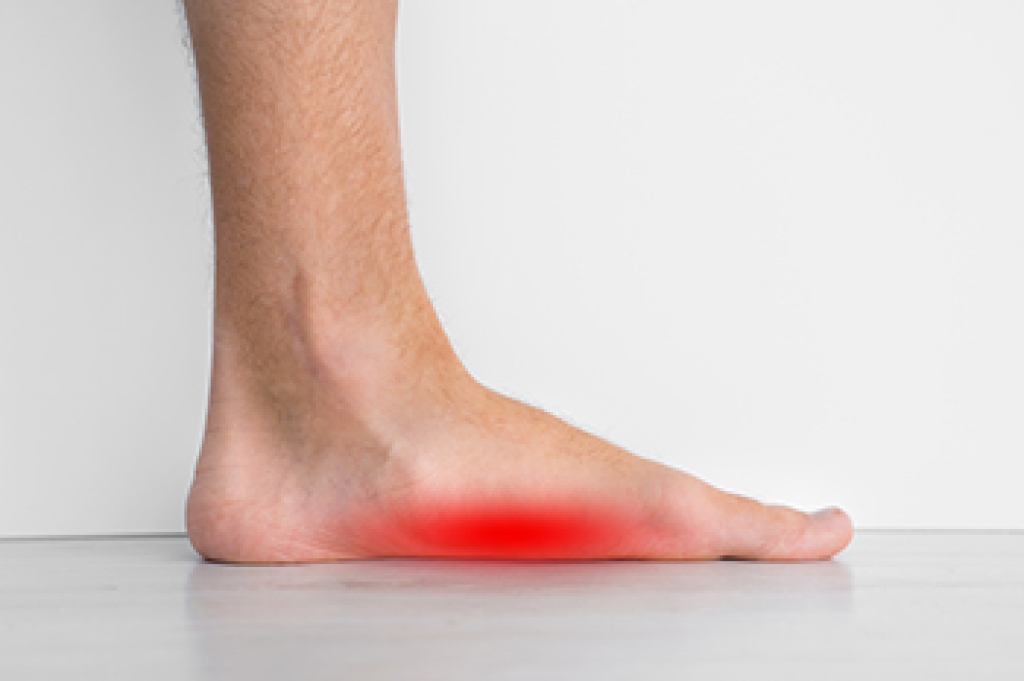
What Are Flat Feet?

Flatfoot is a condition in which the arch of the foot is depressed and the sole of the foot is almost completely in contact with the ground. About 20-30% of the population generally has flat feet because their arches never formed during growth.

Conditions & Problems:

Having flat feet makes it difficult to run or walk because of the stress placed on the ankles.

Alignment – The general alignment of your legs can be disrupted, because the ankles move inward which can cause major discomfort.

Knees – If you have complications with your knees, flat feet can be a contributor to arthritis in that area.  

Symptoms

  • Pain around the heel or arch area
  • Trouble standing on the tip toe
  • Swelling around the inside of the ankle
  • Flat look to one or both feet
  • Having your shoes feel uneven when worn

Treatment

If you are experiencing pain and stress on the foot you may weaken the posterior tibial tendon, which runs around the inside of the ankle. 

If you have any questions, please feel free to contact our office located in Deerfield Beach, FL . We offer the newest diagnostic and treatment technologies for all your foot care needs.
Read more about Flat Feet

Effective Strategies for Managing Bunions

Bunions are bony protrusions at the base of the big toe that can not only be unsightly, but also painful. Managing bunions involves a combination of self care and professional guidance. Begin by wearing well-fitting shoes with ample room for your toes and avoiding high heels and pointy shoes that exacerbate pressure on the bunion. Taking over-the-counter pain relievers can provide temporary relief. Wearing custom orthotic inserts can alleviate discomfort by redistributing pressure. Regularly performing gentle toe stretches and exercises can improve flexibility and strength. In severe cases, surgical intervention may be considered. With a proactive approach, you can successfully manage bunions and maintain your foot health. If the bunion causes persistent pain or interferes with daily activities, it is suggested that you consult a podiatrist who can offer you additional relief and treatment methods. 

If you are suffering from bunion pain, contact one of our podiatrists of East Ocean Podiatry . Our doctors can provide the care you need to keep you pain-free and on your feet.

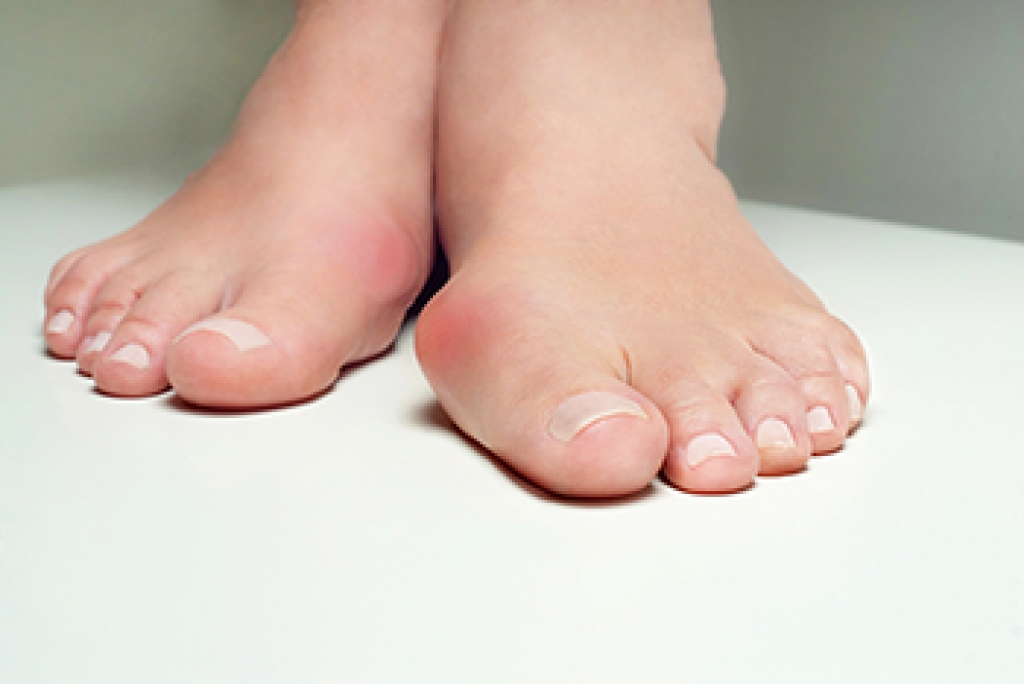
What Is a Bunion?

Bunions are painful bony bumps that usually develop on the inside of the foot at the joint of the big toe. As the deformity increases over time, it may become painful to walk and wear shoes. Women are more likely to exacerbate existing bunions since they often wear tight, narrow shoes that shift their toes together. Bunion pain can be relieved by wearing wider shoes with enough room for the toes.

Causes

  • Genetics – some people inherit feet that are more prone to bunion development
  • Inflammatory Conditions - rheumatoid arthritis and polio may cause bunion development

Symptoms

  • Redness and inflammation
  • Pain and tenderness
  • Callus or corns on the bump
  • Restricted motion in the big toe

In order to diagnose your bunion, your podiatrist may ask about your medical history, symptoms, and general health. Your doctor might also order an x-ray to take a closer look at your feet. Nonsurgical treatment options include orthotics, padding, icing, changes in footwear, and medication. If nonsurgical treatments don’t alleviate your bunion pain, surgery may be necessary.

If you have any questions, please feel free to contact our office located in Deerfield Beach, FL . We offer the newest diagnostic and treatment technologies for all your foot care needs.
Read more about Bunions

Toe Capsulitis Pain

Capsulitis is a painful condition that affects the front part of the foot and can worsen over time. The smaller toes have three joints each. If the pain comes from the ball of the foot, it might indicate capsulitis. This happens when a ligament in the joint becomes inflamed. Capsulitis mainly affects the second toe, sometimes extending to the third toe. Symptoms include pain, swelling, and redness in the front part of the foot. Walking and wearing shoes can be uncomfortable. Neglecting capsulitis can lead to additional problems like calluses and curled toes. It can even cause one toe to cross over another. Capsulitis can result from injuries, poor foot mechanics, ill-fitting shoes, or conditions like arthritis. Some individuals are more susceptible due to their foot structure. Treatment includes resting, wearing shoe inserts, exercising the foot, avoiding tight, thin-soled shoes, and elevating the foot. If you have persisting toe pain, it is suggested that you make an appointment with a podiatrist for care. 

Toe pain can disrupt your daily activities. If you have any concerns, contact one of our podiatrists of East Ocean Podiatry . Our doctors can provide the care you need to keep you pain-free and on your feet.

What Causes Toe Pain?

Most severe toe pain is caused due to a sports injury, trauma from dropping something heavy on the toe, or bumping into something rigid. Other problems can develop over time for various reasons.

Toe pain can be caused by one or more ailments. The most common include:

  • Trauma
  • Sports injury
  • Wearing shoes that are too tight
  • Arthritis
  • Gout
  • Corns and calluses
  • Hammertoe
  • Bunions
  • Blisters
  • Ingrown toenails
  • Sprains
  • Fractures (broken bones)
  • Dislocations

When to See a Podiatrist

  • Severe pain
  • Persistent pain that lasts more than a week
  • Signs of infection
  • Continued swelling
  • Pain that prevents walking

Diagnosis

In many cases the cause of toe pain is obvious, but in others, a podiatrist may want to use more advanced methods to determine the problem. These can range from simple visual inspections and sensation tests to X-rays and MRI scans. Prior medical history, family medical history, and any recent physical traumatic events will all be taken into consideration for a proper diagnosis.

Treatment

Treatments for toe pain and injuries vary and may include shoe inserts, padding, taping, medicines, injections, and in some cases, surgery. If you believe that you have broken a toe, please see a podiatrist as soon as possible.

If you have any questions please contact our office located in Deerfield Beach, FL . We offer the newest diagnostic and treatment technologies for all your foot and ankle needs.

Read more about Toe Pain

Possible Remedies for Corns on the Feet

Foot corns are characterized by bumps that are thickened layers of hard skin and form on bony areas of the feet. They generally occur on the tops and sides of the toes, due to friction and pressure. Ill-fitting shoes and socks can contribute to their development. Some people with conditions that cause abnormal alignment of the bones in the feet, such as arthritis, bunions, or hammertoes, may be at a higher risk for developing corns. There are three types of foot corns consisting of hard, soft, and seed corns. Hard corns are firm when touched, and form on the tops of toes. Soft corns are pliable and typically form between the toes. Seed corns are very small and usually occur on the soles of the feet. Corns are sometimes confused with calluses but differ in location, size, tenderness, and inflammation. Preventing foot corns involves wearing well-fitting, comfortable shoes, and especially avoiding high heels and pointy-toed footwear. One can soak their foot and gently exfoliate the skin of the corn with a pumice stone or foot file. Covering the corn can protect against friction. If you have corns that are causing pain, or if you also have diabetes, it is strongly suggested that you make an appointment with a podiatrist who can provide additional treatment that can prevent complications.

If you have any concerns regarding your feet and ankles, contact one of our podiatrists of East Ocean Podiatry . Our doctors will treat your foot and ankle needs.

Corns: What Are They? and How Do You Get Rid of Them?
Corns can be described as areas of the skin that have thickened to the point of becoming painful or irritating. They are often layers and layers of the skin that have become dry and rough, and are normally smaller than calluses.

Ways to Prevent Corns
There are many ways to get rid of painful corns such as wearing:

  • Well-fitting socks
  • Comfortable shoes that are not tight around your foot
  • Shoes that offer support

Treating Corns
Treatment of corns involves removing the dead skin that has built up in the specific area of the foot. Consult with Our doctors to determine the best treatment option for your case of corns.

If you have any questions, please feel free to contact our office located in Deerfield Beach, FL . We offer the newest diagnostic and treatment technologies for all your foot care needs.

Read more about Corns and Calluses

Heel Pain Can Be Treated!

Do you suffer from heel pain when you get up in the morning? If so, you should seek professional help and have a proper diagnosis performed. Heel pain can be caused by several different foot-related conditions.

Managing Foot Drop

A condition known as foot drop is characterized by the inability to clear the ground while taking a step. Instead, the toe drags along the ground when you walk, causing the need to lift the foot in a march-like stance. Foot drop is caused by a weakness or paralysis of the muscles that lift the foot. It can be the result of injury or damage to the nerves in the leg. It also can be the result of a neurological condition, such as multiple sclerosis. Other conditions linked to foot drop include stroke and peripheral neuropathy. In some cases, foot drop can be managed if not cured. Certain exercises can help to strengthen muscles in the feet and lower legs. Removing loose rugs in the home that can cause tripping or falling is another measure that can reduce the effects of foot drop. An ankle-foot orthosis on the lower part of the leg can help to direct control of the foot and ankle. A change in footwear to shoes with adjustable straps and lower heels may also be needed. To find out more about ways of dealing with foot drop, it is suggested that you make an appointment with a podiatrist.

If you have any concerns about your feet, contact one of our podiatrists from East Ocean Podiatry . Our doctors can provide the care you need to keep you pain-free and on your feet.

Biomechanics in Podiatry

Podiatric biomechanics is a particular sector of specialty podiatry with licensed practitioners who are trained to diagnose and treat conditions affecting the foot, ankle and lower leg. Biomechanics deals with the forces that act against the body, causing an interference with the biological structures. It focuses on the movement of the ankle, the foot and the forces that interact with them.

A History of Biomechanics

  • Biomechanics dates back to the BC era in Egypt where evidence of professional foot care has been recorded.
  • In 1974, biomechanics gained a higher profile from the studies of Merton Root, who claimed that by changing or controlling the forces between the ankle and the foot, corrections or conditions could be implemented to gain strength and coordination in the area.

Modern technological improvements are based on past theories and therapeutic processes that provide a better understanding of podiatric concepts for biomechanics. Computers can provide accurate information about the forces and patterns of the feet and lower legs.

Understanding biomechanics of the feet can help improve and eliminate pain, stopping further stress to the foot.

If you have any questions please feel free to contact our office located in Deerfield Beach, FL . We offer the newest diagnostic and treatment technologies for all your foot and ankle needs.

Read more about Biomechanics in Podiatry

Connect With Us