
Surgery May Be Necessary for Permanent Relief From an Ingrown Toenail

An ingrown toenail is generally a painful foot condition. It has noticeable symptoms, and occurs as a result of the toenail growing into the surrounding skin instead of over it. The affected skin is often swollen and will appear to be red. In severe cases, an infection may set in, possibly causing bleeding. Wearing shoes that do not fit correctly can contribute significantly to developing an ingrown toenail, or it may come from genetic reasons. Many patients notice that the toe feels better when it is soaked in warm water, which can help to soften the skin. This may bring mild temporary relief, but you may ultimately need to visit a podiatrist for permanent relief. To achieve this, surgery may be necessary, and this involves removing the nail border. The purpose of this is to prevent potential damage to the soft tissues. If you have developed an ingrown toenail, it is strongly suggested that you visit a podiatrist as quickly as possible who can offer you correct treatment options, in addition to possibly performing surgery.

Ingrown toenails may initially present themselves as a minor discomfort, but they may progress into an infection in the skin without proper treatment. For more information about ingrown toenails, contact one of our podiatrists of East Ocean Podiatry . Our doctors can provide the care you need to keep you pain-free and on your feet.

Ingrown Toenails

Ingrown toenails are caused when the corner or side of a toenail grows into the soft flesh surrounding it. They often result in redness, swelling, pain, and in some cases, infection. This condition typically affects the big toe and may recur if it is not treated properly.

Causes

  • Improper toenail trimming
  • Genetics
  • Improper shoe fitting
  • Injury from pedicures or nail picking
  • Abnormal gait
  • Poor hygiene

You are more likely to develop an ingrown toenail if you are obese, have diabetes, arthritis, or have any fungal infection in your nails. Additionally, people who have foot or toe deformities are at a higher risk of developing an ingrown toenail.

Symptoms

Some symptoms of ingrown toenails are redness, swelling, and pain. In rare cases, there may be a yellowish drainage coming from the nail.

Treatment

Ignoring an ingrown toenail can have serious complications. Infections of the nail border can progress to a deeper soft-tissue infection, which can then turn into a bone infection. You should always speak with your podiatrist if you suspect you have an ingrown toenail, especially if you have diabetes or poor circulation.

If you have any questions, please feel free to contact our office located in Deerfield Beach, FL . We offer the newest diagnostic and treatment technologies for all your foot care needs.


Read more about Ingrown Toenails

Who Gets Cuboid Syndrome?

Cuboid syndrome can occur in an individual when the cuboid bone, located on the outer side of the foot, moves out of its place. This is typically caused by trauma or injury, and it may result in some kind of pain. Although cuboid syndrome is only 4% of all foot injuries, it can affect some individuals at a higher rate than others. For example, among professional ballet dancers, cuboid syndrome made up 17% of all foot and ankle injuries. Also, obese people and individuals who carry excessive body weight put more pressure on to their feet and are more likely to develop cuboid syndrome. If you are someone who wears shoes that do not fit properly or wears poorly constructed orthoses, then you are also at an increased risk of developing cuboid syndrome. Contact a podiatrist for advice and treatment regarding cuboid syndrome.

Cuboid syndrome, also known as cuboid subluxation, occurs when the joints and ligaments near the cuboid bone in the foot become torn. If you have cuboid syndrome, consult with one of our podiatrists from East Ocean Podiatry . Our doctors will assess your condition and provide you with quality foot and ankle treatment.

Cuboid syndrome is a common cause of lateral foot pain, which is pain on the outside of the foot. The condition may happen suddenly due to an ankle sprain, or it may develop slowly overtime from repetitive tension through the bone and surrounding structures.

Causes

The most common causes of cuboid syndrome include:

  • Injury – The most common cause of this ailment is an ankle sprain.
  • Repetitive Strain – Tension placed through the peroneus longus muscle from repetitive activities such as jumping and running may cause excessive traction on the bone causing it to sublux.
  • Altered Foot Biomechanics – Most people suffering from cuboid subluxation have flat feet.

Symptoms

A common symptom of cuboid syndrome is pain along the outside of the foot which can be felt in the ankle and toes. This pain may create walking difficulties and may cause those with the condition to walk with a limp.

Diagnosis

Diagnosis of cuboid syndrome is often difficult, and it is often misdiagnosed. X-rays, MRIs and CT scans often fail to properly show the cuboid subluxation. Although there isn’t a specific test used to diagnose cuboid syndrome, your podiatrist will usually check if pain is felt while pressing firmly on the cuboid bone of your foot.

Treatment

Just as the range of causes varies widely, so do treatments. Some more common treatments are ice therapy, rest, exercise, taping, and orthotics.

If you have any questions, please feel free to contact our office located in Deerfield Beach, FL . We offer the newest diagnostic and treatment technologies for all your foot care needs.

Read more about Cuboid Syndrome

Stretches May Help Before Walking

Research has shown that one of the best things you can do if you have arthritis in your feet is to walk as much as possible. This may cause pain to the feet and ankles, despite being overall beneficial. Performing stretches and exercises may strengthen the feet, possibly reduce arthritis symptoms, and this may be helpful to do before walking. An effective exercise is done by spreading marbles on the floor, followed by sitting on a chair. The marbles are picked up one at a time using the toes, and placed into a cup. Many patients find relief when their foot is placed on top of a tennis ball, and the entire foot is rolled on it. This can be beneficial in strengthening the soles of the feet. There are some patients that notice that as their feet become stronger, their arthritis symptoms may decrease. If you would like information about additional stretches to perform that can help arthritic feet, please confer with a podiatrist. 

Arthritis can be a difficult condition to live with. If you are seeking treatment, contact one of our podiatrists from East Ocean Podiatry . Our doctors can provide the care you need to keep you pain-free and on your feet.

Arthritic Foot Care  

Arthritis is a term that is commonly used to describe joint pain.  The condition itself can occur to anyone of any age, race, or gender, and there are over 100 types of it.  Nevertheless, arthritis is more commonly found in women compared to men, and it is also more prevalent in those who are overweight. The causes of arthritis vary depending on which type of arthritis you have. Osteoarthritis for example, is often caused by injury, while rheumatoid arthritis is caused by a misdirected immune system.

Symptoms

  • Swelling
  • Pain
  • Stiffness
  • Decreased Range of Motion

Arthritic symptoms range in severity, and they may come and go. Some symptoms stay the same for several years but could potentially get worse with time. Severe cases of arthritis can prevent its sufferers from performing daily activities and make walking difficult.

Risk Factors

  • Occupation – Occupations requiring repetitive knee movements have been linked to osteoarthritis
  • Obesity – Excess weight can contribute to osteoarthritis development
  • Infection – Microbial agents can infect the joints and trigger arthritis
  • Joint Injuries – Damage to joints may lead to osteoarthritis
  • Age – Risk increases with age
  • Gender –Most types are more common in women
  • Genetics – Arthritis can be hereditary

If you suspect your arthritis is affecting your feet, it is crucial that you see a podiatrist immediately. Your doctor will be able to address your specific case and help you decide which treatment method is best for you.

If you have any questions please feel free to contact our office located in Deerfield Beach, FL . We offer the newest diagnostic tools and technology to treat your foot and ankle needs.

Read more about How to Care for Your Arthritic Foot

Blisters Between Toes

A blister is a fluid-filled bubble that forms on the skin. The fluid can be clear or contain blood. If blisters develop between the toes, it can cause pain, particularly the longer one spends on their feet. The two main types of blisters on or between the toes are those from friction and those not due to friction. Friction or pinch blisters are more common and result from toes repeatedly rubbing against each other or against the shoe lining, irritating the skin. These are related to the shape and alignment of toes, fit of shoe, and usually form near the tip of the toe or by the base of the toe.  Sweaty toes are more apt to lead to friction blisters. Blisters not due to friction can develop from an infection (like athlete’s foot), a skin condition, a sunburn, or an allergy. Both types of blisters might look the same. However, the location of the blister and what causes it can help determine the type. Non-friction blisters should be evaluated by a podiatrist. With both types of blisters, good foot hygiene can help prevent them. Popping or picking at blisters should be avoided as broken skin can attract bacteria, which can cause an infection. If you have a blister on or between your toes and you are not sure of the cause, it appears infected, or if it is not healing well, contact a podiatrist for an evaluation and treatment options.

Blisters are prone to making everyday activities extremely uncomfortable. If your feet are hurting, contact one of our podiatrists of East Ocean Podiatry . Our doctors can provide the care you need to keep you pain-free and on your feet.

Foot Blisters

Foot blisters develop as a result of constantly wearing tight or ill-fitting footwear. This happens due to the constant rubbing from the shoe, which can often lead to pain.

What Are Foot Blisters?

A foot blister is a small fluid-filled pocket that forms on the upper-most layer of the skin. Blisters are filled with clear fluid and can lead to blood drainage or pus if the area becomes infected.

How Do Blisters Form?

Blisters on the feet are often the result of constant friction of skin and material, usually by shoe rubbing. Walking in sandals, boots, or shoes that don’t fit properly for long periods of time can result in a blister. Having consistent foot moisture and humidity can easily lead to blister formation.

Prevention & Treatment

It is important to properly care for the affected area in order to prevent infection and ease the pain. Do not lance the blister and use a Band-Aid to provide pain relief. Also, be sure to keep your feet dry and wear proper fitting shoes. If you see blood or pus in a blister, seek assistance from a podiatrist.

If you have any questions, please feel free to contact our office located in Deerfield Beach, FL . We offer the newest diagnostic and treatment technologies for all your foot care needs.

Read more about Blisters

Broken and Sprained Ankles

The ankle is a necessary and critical part of the human body. The ankle joint allows the foot to move in different directions and makes walking and running possible. However, the ankle can be very susceptible to suffering from certain kinds of injuries. For example, broken ankles can be a serious threat to your health. Importantly, broken ankles are distinctly different from sprained ankles. When an individual breaks their ankle, the bones become essentially fractured. This is to say that bones such as the tibia, fibula, or talus can become fractured. If you have a broken ankle, you might experience several different symptoms. Commonly, an individual might experience feelings of pain or even swelling. Contrastingly, a person who sprains their ankle injures the ligaments surrounding the ankle, not the bones. When a person sprains their ankle the tissues become strained or overly stretched. Although these two injuries are different, it is possible to experience both at the same time in a very severe ankle injury. If you are worried about the health of your ankles, contact a podiatrist for more information about broken and sprained ankles.

Broken ankles need immediate treatment. If you are seeking treatment, contact one of our podiatrists from East Ocean Podiatry . Our doctors can provide the care you need to keep you pain-free and on your feet. 

Broken Ankles
A broken ankle is experienced when a person fractures their tibia or fibula in the lower leg and ankle area. Both of these bones are attached at the bottom of the leg and combine to form what we know to be our ankle.

When a physician is referring to a break of the ankle, he or she is usually referring to a break in the area where the tibia and fibula are joined to create our ankle joint. Ankles are more prone to fractures because the ankle is an area that suffers a lot of pressure and stress. There are some obvious signs when a person experiences a fractured ankle, and the following symptoms may be present.

Symptoms of a Fractured Ankle

  • Excessive pain when the area is touched or when any pressure is placed on the ankle
  • Swelling around the area
  • Bruising of the area
  • Area appears to be deformed

If you suspect an ankle fracture, it is recommended to seek treatment as soon as possible. The sooner you have your podiatrist diagnose the fracture, the quicker you’ll be on the way towards recovery.

If you have any questions, please feel free to contact our office located in Deerfield Beach, FL . We offer the newest diagnostic and treatment technologies for all your foot care needs.

Read more about All About Broken Ankles

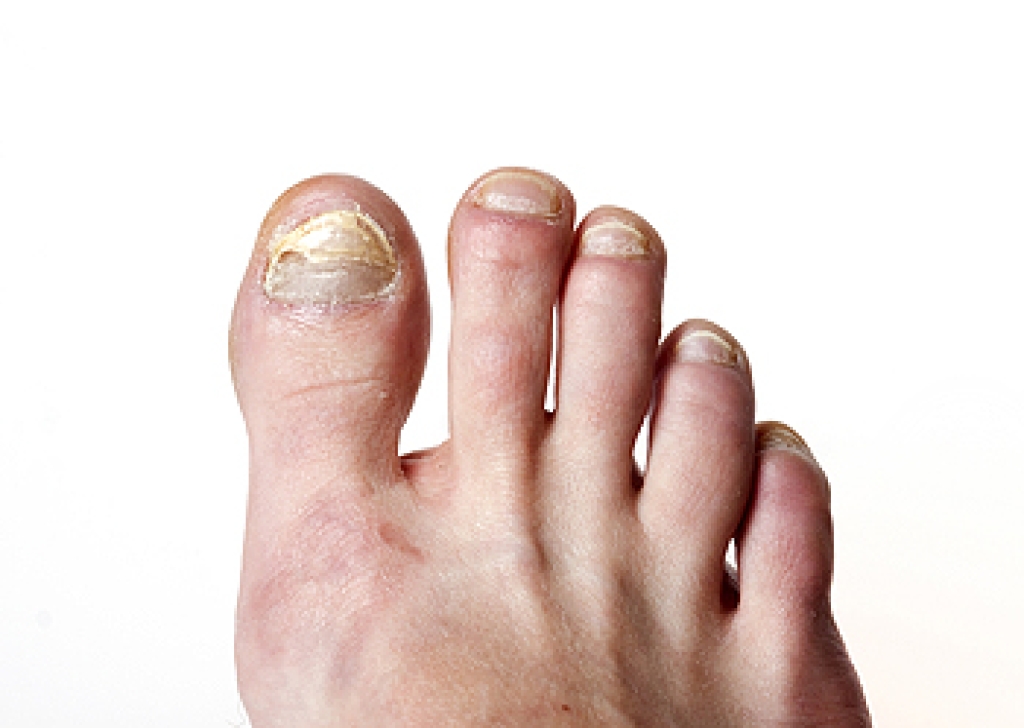
Discoloration and Toenail Fungus

Sometimes, a toenail’s natural translucent color can be manipulated into an entirely different shade. One potential common cause of such discoloration is toenail fungus. Toenail fungus can be caused by an organism named dermatophyte. If your toenail has been infected by a fungus, you might notice that the shade of the nail has changed to yellow, reddish brown, black, or green. This discoloration can start small, for example underneath the tip of the affected nail, before growing larger in size if unaddressed. There are also several things that can increase one’s risk of developing a toenail fungus. If you sweat frequently, walk barefoot in warm and moist environments, or are prone to enduring small cuts near the nail, you may be at an increased risk of developing toenail fungus and potentially discoloration. Of course, discoloration can be caused by things other than toenail fungus. Namely, injuries, nail polish, and particular health conditions can also contribute to discoloration. However, it is important for you to be aware of the causal connection between toenail fungus and discoloration of the toenail. If you have discoloration of the nail, contact a podiatrist.

For more information about treatment, contact one of our podiatrists of East Ocean Podiatry . Our doctors can provide the care you need to keep you pain-free and on your feet.

Toenail Fungus Treatment

Toenail fungus is a condition that affects many people and can be especially hard to get rid of. Fortunately, there are several methods to go about treating and avoiding it.

Antifungals & Deterrence

Oral antifungal medicine has been shown to be effective in many cases. It is important to consult with a podiatrist to determine the proper regiment for you, or potentially explore other options.

Applying foot powder on the feet and shoes helps keep the feet free of moisture and sweat.

Sandals or open toed shoes – Wearing these will allow air movement and help keep feet dry. They also expose your feet to light, which fungus cannot tolerate. Socks with moisture wicking material also help as well.

If you have any questions please contact our office located in Deerfield Beach, FL . We offer the newest diagnostic and treatment technologies for all your foot and ankle needs.

Read more about Toenail Fungus

Getting 'Back in the Game' After an Ankle Sprain

The strong bands of ligaments that bind together and support the ankle bones can become injured when they are stretched beyond their normal constraints during physical activity, or if the ankle is chronically unstable and “turns out.” This injury is known as an ankle sprain. There are several grades of ankle sprains, with the most severe ones involving a partial or full tear of the ligament(s). Symptoms of an ankle sprain include varying degrees of pain, bruising, stiffness, swelling, and soreness. Depending on how bad the sprain is, and whether the ligament has torn, it may be difficult or impossible to walk on the affected foot. Even mild ankle sprains should be assessed and treated by a podiatrist, as improperly healed sprains may lead to future sprains and chronic ankle instability. Contact a podiatrist if you have sustained an ankle injury, or if you have weak ankles due to a prior ankle sprain. They will be able to help your ankle heal properly so you can get “back in the game,” and avoid any future complications.

Ankle sprains are common but need immediate attention. If you need your feet checked, contact one of our podiatrists from East Ocean Podiatry . Our doctors can provide the care you need to keep you pain-free and on your feet.

How Does an Ankle Sprain Occur?

Ankle sprains take place when the ligaments in your ankle are torn or stretched beyond their limits. There are multiple ways that the ankle can become injured, including twisting or rolling over onto your ankle, putting undue stress on it, or causing trauma to the ankle itself.

What Are the Symptoms?

  • Mild to moderate bruising
  • Limited mobility
  • Swelling
  • Discoloration of the skin (depending on severity)

Preventing a Sprain

  • Wearing appropriate shoes for the occasion
  • Stretching before exercises and sports
  • Knowing your limits

Treatment of a Sprain

Treatment of a sprain depends on the severity.  Many times, people are told to rest and remain off their feet completely, while others are given an air cast. If the sprain is very severe, surgery may be required.

If you have suffered an ankle sprain previously, you may want to consider additional support such as a brace and regular exercises to strengthen the ankle.

If you have any questions please feel free to contact our office located in Deerfield Beach, FL . We offer the newest diagnostic tools and technology to treat your foot and ankle needs.

Read more about Ankle Sprains

What Causes Compartment Syndrome?

Compartment syndrome is a serious condition that can affect the overall health of your foot. A group of muscles, along with nerves and blood vessels, is contained in a band of tissue called a compartment. The fascia around the muscles does not expand, so if it sustains an injury it may bleed or swell. This causes pressure to build up, which cuts off the blood supply of nutrients and oxygen to the muscle. Muscles can become permanently damaged if not treated quickly. There are two types of compartment syndrome, acute and chronic. Acute compartment syndrome is usually the result of a fracture. It also can be caused by trauma, a bruised muscle, a severe sprain, or even a cast or bandage that is too tight. Chronic compartment syndrome is caused by repetitive activity, and is more common among runners, especially those over 40. It differs from the acute syndrome because the pressure occurs only during the activity and recedes when it stops. Chronic, also called long-term, compartment syndrome can affect activity and endurance, but rarely endangers the muscles. To confirm a diagnosis of compartment syndrome, please see a podiatrist for an examination. 

Foot Pain

Foot pain can be extremely painful and debilitating. If you have a foot pain, consult with one of our podiatrists from East Ocean Podiatry . Our doctors will assess your condition and provide you with quality foot and ankle treatment.

Causes

Foot pain is a very broad condition that could be caused by one or more ailments. The most common include:

  • Bunions
  • Hammertoes
  • Plantar Fasciitis
  • Bone Spurs
  • Corns
  • Tarsal Tunnel Syndrome
  • Ingrown Toenails
  • Arthritis (such as Gout, Rheumatoid, and Osteoarthritis)
  • Flat Feet
  • Injury (from stress fractures, broken toe, foot, ankle, Achilles tendon ruptures, and sprains)
  • And more

Diagnosis

To figure out the cause of foot pain, podiatrists utilize several different methods. This can range from simple visual inspections and sensation tests to X-rays and MRI scans. Prior medical history, family medical history, and any recent physical traumatic events will all be taken into consideration for a proper diagnosis.

Treatment

Treatment depends upon the cause of the foot pain. Whether it is resting, staying off the foot, or having surgery; podiatrists have a number of treatment options available for foot pain.

If you have any questions, please feel free to contact our office located in Deerfield Beach, FL . We offer the newest diagnostic and treatment technologies for all your foot care needs.
Read more about Foot Pain

Let the Expert Treat Your Ingrown Toenails

Ingrown toenails can be painful and can make wearing shoes or walking uncomfortable. Seek professional help if you believe you've developed an ingrown toenail and be treated safely. 

Connect With Us