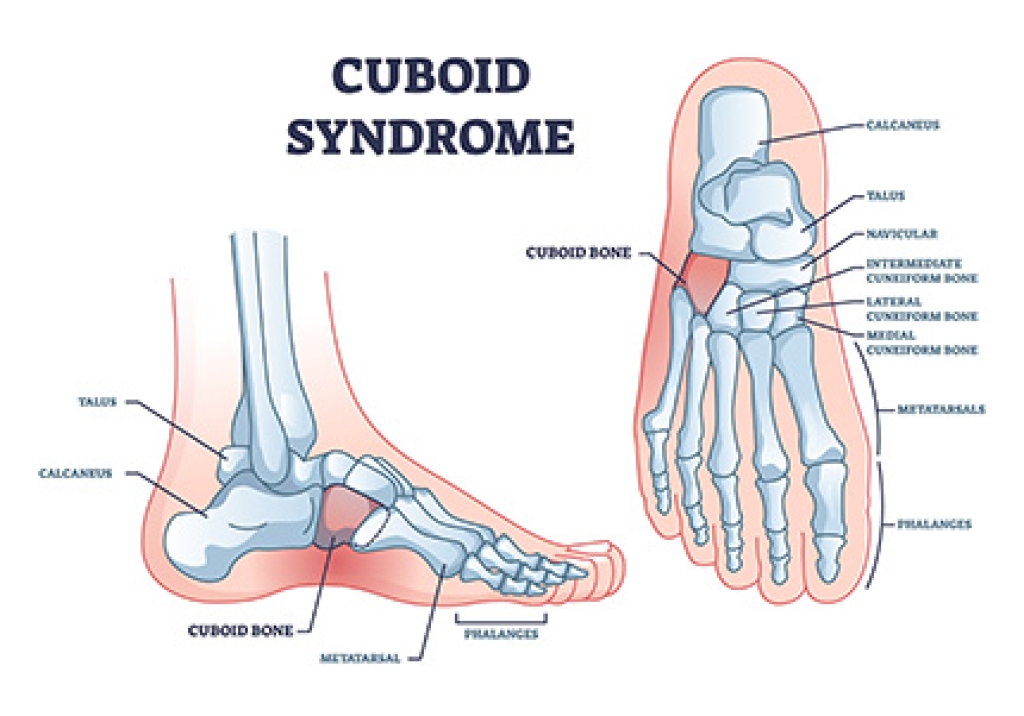
Cuboid syndrome causes pain along the outside of the foot, near a bone called the cuboid. This bone sits in the middle of the foot and connects with the heel bone. Bands of tissue help hold these bones in position. When those bands stretch or become injured, the cuboid can shift and cause discomfort. An ankle sprain can trigger this problem. Repeated impact from running or dancing can also place stress on the area. Athletes who make quick side-to-side movements may be vulnerable.
Pain from cuboid syndrome can begin suddenly or build gradually. Some patients notice a popping feeling when the injury occurs. Symptoms include tenderness, weakness, and discomfort along the outer foot. Swelling or bruising can appear near the middle of the foot. Pain sometimes seems to spread toward the outside of the ankle. Walking can become difficult, and patients may limp to avoid pressure on the sore area. Because other foot injuries can cause similar pain, identifying the source is important. A podiatrist can check whether a sprain or another injury is also present.
A podiatrist can examine the foot, ask how the pain started, and check the movement of nearby joints. Imaging tests may help rule out a fracture, although cuboid syndrome usually does not appear on X-rays. Treatment can include joint movement guided by the podiatrist to improve alignment. Supportive shoes and cushioned inserts can help reduce stress on the affected area. A podiatrist may also recommend a supervised strengthening plan and assess when it is safe to resume activities. Recovery can be quicker when no other injury is involved, while an accompanying ankle sprain may require more time. If you have symptoms of cuboid syndrome, it is suggested that you schedule an appointment with a podiatrist for a diagnosis and appropriate treatment.
Cuboid syndrome, also known as cuboid subluxation, occurs when the joints and ligaments near the cuboid bone in the foot become torn. If you have cuboid syndrome, consult with one of our podiatrists from East Ocean Podiatry . Our doctors will assess your condition and provide you with quality foot and ankle treatment.
Cuboid syndrome is a common cause of lateral foot pain, which is pain on the outside of the foot. The condition may happen suddenly due to an ankle sprain, or it may develop slowly overtime from repetitive tension through the bone and surrounding structures.
Causes
The most common causes of cuboid syndrome include:
- Injury – The most common cause of this ailment is an ankle sprain.
- Repetitive Strain – Tension placed through the peroneus longus muscle from repetitive activities such as jumping and running may cause excessive traction on the bone causing it to sublux.
- Altered Foot Biomechanics – Most people suffering from cuboid subluxation have flat feet.
Symptoms
A common symptom of cuboid syndrome is pain along the outside of the foot which can be felt in the ankle and toes. This pain may create walking difficulties and may cause those with the condition to walk with a limp.
Diagnosis
Diagnosis of cuboid syndrome is often difficult, and it is often misdiagnosed. X-rays, MRIs and CT scans often fail to properly show the cuboid subluxation. Although there isn’t a specific test used to diagnose cuboid syndrome, your podiatrist will usually check if pain is felt while pressing firmly on the cuboid bone of your foot.
Treatment
Just as the range of causes varies widely, so do treatments. Some more common treatments are ice therapy, rest, exercise, taping, and orthotics.
If you have any questions, please feel free to contact our office located in Deerfield Beach, FL . We offer the newest diagnostic and treatment technologies for all your foot care needs.
